There are two types of fibers: natural and synthetic. Natural fibers start as a plant growing in the ground or as animal protein. Cotton, wool, linen, and silk are the most used natural fibers. Synthetic fibers are manufactured from chemical compounds. Nylon, polyester, and acrylic are the most common.
Saturday, December 3, 2011
Different Types of Fibers
A fiber is pretty much the building block of any fabric. fabric is made of yarns that are woven or knitted together, the yarn is created by fibers being twisted together. Sometimes fibers are found in things such as tennis balls and hot air balloons. the fuzz of a tennis ball is made up of; wool, nylon, and polyester. you will also find nylon in hot air baloons and sails on a boat.

Saturday, November 26, 2011
Other Stuff about hair and Fiber Analysis
History
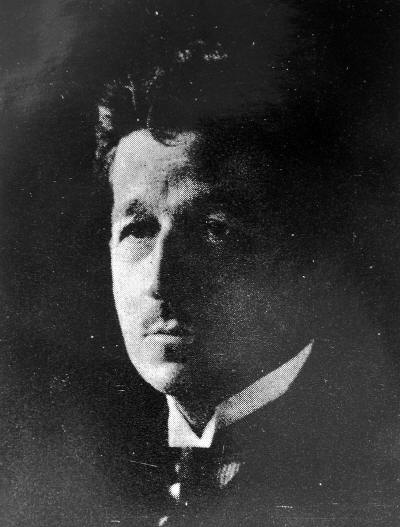
French scientist Edmond Locard discovered that people constantly pick up and transfer bits of dust, hair, fibers and other "trace" material without being conscious of it. Locard realized that these material exchanges were key to analyzing a crime scene, and the "Locard Exchange Principle" became the foundation of forensic science in the early 1900s.German pathologist Rudolf Virchow later showed that hairs were not unique enough to positively match a particular suspect to a particular victim.In the United States, Paul L. Kirk established the fundamentals of microscopic hair analysis used by scientists today, and his groundbreaking textbook, "Crime Investigation," is still an important text in criminal investigation.
Significance
- Hair is easy to transfer from one person to another. It clings to furniture, carpets and clothing, and it can last for years without decomposing. These characteristics make the hair left at a crime scene an important aspect of trace evidence. Even if a suspect tried to clean up the crime site, she would most likely leave hair behind.Hair is easily analyzed with modern technology, like polarized light microscopes, which bring out the color and details of a hair specimen; and comparison microscopes, which allow the scientist to analyze two pieces of hair evidence side-by-side.
Function
- Hair analysis helps investigators identify individuals involved in a crime scene. Analysts first determine whether the hair came from the victim, a suspect or an animal. If the trace hair is human and matches the hair of the victim, it may help to identify the victim. If the trace hair does not belong to the victim, it may belong to the criminal. In that case, it may provide information about the relationship between the perpetrator and the crime scene, and between the perpetrator and the victim. It may also eliminate a particular suspect, thereby exonerating him.
Comparison

Considerations
- Forensic hair analysis has limitations. Humans share hair characteristics, like color and texture, so hair alone cannot positively identify someone as a perpetrator. Hair analysis can point to a suspect, but, without DNA evidence, forensic analysis alone cannot state positively that a specific hair sample came from one particular individual and not another. Even if the trace hair matches the known hair sample from a suspect, it would probably also match samples from many other individuals. But even with this limitation, forensic hair analysis is considered one of the most valuable tools available to crime investigators.
Read more: Forensic Analysis of Hair | eHow.com http://www.ehow.com/about_5597295_forensic-analysis-hair.html#ixzz1epM1htwv
INtroduction to Hair and Fiber Analysis

Forensic hair analysis is a scientific method of analyzing trace evidence from a crime scene. It involves examining the hair shaft, including its medulla (inner core), cortex (intermediate layer) and cuticle (outer covering) through powerful microscopes and, occasionally, finding DNA evidence in tissue left on the hair shaft. Hair evidence must be collected properly and analyzed according to protocols. Forensic hair analysts have special training and technology to make sure their work will hold up in court.
Read more: Forensic Analysis of Hair | eHow.com http://www.ehow.com/about_5597295_forensic-analysis-hair.html#ixzz1epJTvNVm
Read more: Forensic Analysis of Hair | eHow.com http://www.ehow.com/about_5597295_forensic-analysis-hair.html#ixzz1epJTvNVm
Wednesday, November 16, 2011
Fingerprinting Process
The technique of fingerprinting is known as dactyloscopy. Until the advent of digital scanning technologies, fingerprinting was done using ink and a card.
To create an ink fingerprint, the person's finger is first cleaned with alcohol to remove any sweat and dried thoroughly. The person rolls his or her fingertips in ink to cover the entire fingerprint area. Then, each finger is rolled onto prepared cards from one side of the fingernail to the other. These are called rolled fingerprints. Finally, all fingers of each hand are placed down on the bottom of the card at a 45-degree angle to produce a set of plain (or flat) impressions. These are used to verify the accuracy of the rolled impressions.
Today, digital scanners capture an image of the fingerprint. To create a digital fingerprint, a person places his or her finger on an optical or silicon reader surface and holds it there for a few seconds. The reader converts the information from the scan into digital data patterns. The computer then maps points on the fingerprints and uses those points to search for similar patterns in the database.
Law enforcement agents can analyze fingerprints they find at the scene of a crime. There are two different types of prints:
To create an ink fingerprint, the person's finger is first cleaned with alcohol to remove any sweat and dried thoroughly. The person rolls his or her fingertips in ink to cover the entire fingerprint area. Then, each finger is rolled onto prepared cards from one side of the fingernail to the other. These are called rolled fingerprints. Finally, all fingers of each hand are placed down on the bottom of the card at a 45-degree angle to produce a set of plain (or flat) impressions. These are used to verify the accuracy of the rolled impressions.
Today, digital scanners capture an image of the fingerprint. To create a digital fingerprint, a person places his or her finger on an optical or silicon reader surface and holds it there for a few seconds. The reader converts the information from the scan into digital data patterns. The computer then maps points on the fingerprints and uses those points to search for similar patterns in the database.
Law enforcement agents can analyze fingerprints they find at the scene of a crime. There are two different types of prints:
- Visible prints are made on a type of surface that creates an impression, like blood, dirt or clay.
Traditional ink fingerprints typically contain rolled and flat prints.Robert Clare/Taxi/Getty Images

- Latent prints are made when sweat, oil and other substances on the skin reproduce the ridge structure of the fingerprints on a glass, murder weapon or any other surface the perpetrator has touched. These prints can't be seen with the naked eye, but they can be made visible using dark powder, lasers or other light sources. Police officers can "lift" these prints with tape or take special photographs of them.
History of Fingerprinting
There are records of fingerprints being taken many centuries ago, although they weren't nearly as sophisticated as they are today. The ancient Babylonians pressed the tips of their fingertips into clay to record business transactions. The Chinese used ink-on-paper finger impressions for business and to help identify their children.

In ancient China, thumb prints were found on clay seals.
In ancient China, thumb prints were found on clay seals.
History of Fingerprinting
However, fingerprints weren't used as a method for identifying criminals until the 19th century. In 1858, an Englishman named Sir William Herschel was working as the Chief Magistrate of the Hooghly district in Jungipoor, India. In order to reduce fraud, he had the residents record their fingerprints when signing business documents.
A few years later, Scottish doctor Henry Faulds was working in Japan when he discovered fingerprints left by artists on ancient pieces of clay. This finding inspired him to begin investigating fingerprints. In 1880, Faulds wrote to his cousin, the famed naturalist Charles Darwin, and asked for help with developing a fingerprint classification system. Darwin declined, but forwarded the letter to his cousin, Sir Francis Galton.
Galton was a eugenicist who collected measurements on people around the world to determine how traits were inherited from one generation to the next. He began collecting fingerprints and eventually gathered some 8,000 different samples to analyze. In 1892, he published a book called "Fingerprints," in which he outlined a fingerprint classification system -- the first in existence. The system was based on patterns of arches, loops and whorls.
Meanwhile, a French law enforcement official named Alphonse Bertillon was developing his own system for identifying criminals. Bertillonage (or anthropometry) was a method of measuring heads, feet and other distinguishing body parts. These "spoken portraits" enabled police in different locations to apprehend suspects based on specific physical characteristics. The British Indian police adopted this system in the 1890s.
History of Fingerprinting
Around the same time, Juan Vucetich, a police officer in Buenos Aires, Argentina, was developing his own variation of a fingerprinting system. In 1892, Vucetich was called in to assist with the investigation of two boys murdered in Necochea, a village near Buenos Aires. Suspicion had fallen initially on a man named Velasquez, a love interest of the boys' mother, Francisca Rojas. But when Vucetich compared fingerprints found at the murder scene to those of both Velasquez and Rojas, they matched Rojas' exactly. She confessed to the crime. This was the first time fingerprints had been used in a criminal investigation. Vucetich called his system comparative dactyloscopy. It's still used in many Spanish-speaking countries.
Sir Edward Henry, commissioner of the Metropolitan Police of London, soon became interested in using fingerprints to nab criminals. In 1896, he added to Galton's technique, creating his own classification system based on the direction, flow, pattern and other characteristics of the friction ridges in fingerprints. Examiners would turn these characteristics into equations and classifications that could distinguish one person's print from another's. The Henry Classification System replaced the Bertillonage system as the primary method of fingerprint classification throughout most of the world.
In 1901, Scotland Yard established its first Fingerprint Bureau. The following year, fingerprints were presented as evidence for the first time in English courts. In 1903, the New York state prisons adopted the use of fingerprints, followed later by the FBI.
Subscribe to:
Posts (Atom)